


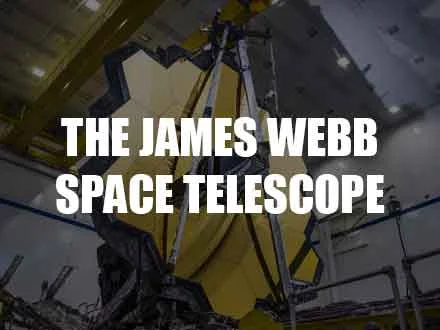
The James Webb Space Telescope (JWST) is the evolution of the Hubble Space Telescope. It is set to be one of the most powerful telescopes in the world. The JWST is a collaboration between NASA, the European Space Agency (ESA), and the Canadian Space Agency (CSA). The telescope was launched into space on December 25th 2021.
The JWST is a infrared telescope; what this means is that it is optimised to detect light at longer wavelengths than visible light. Infrared light can provide a unique look into the universe. It can penetrate through dust and gas, which is opaque to visible light. This allows the JWST to study objects that are otherwise invisible to traditional telescopes.
The Main Goals Of The James Webb Space Telescope
One of the main goals of the JWST is to study the early universe. Researching the formation of galaxies, stars and planets. This telescope impressively will be able to study the light from the first galaxies! The ones that formed after the Big Bang! It will also be able to study the formation of stars and planets in greater detail; by observing the light emitted by young stars and protoplanetary disks.
Another goal of the JWST is to study the atmospheres of exoplanets, which are planets that orbit stars other than the sun. The telescope will be able to study the light that passes through the atmospheres of these planets. Therefore allowing scientists to determine the composition of the atmospheres and search for signs of life.
Where is NASA's James Webb Space Telescope?
NASA has selected a highly stable location for the James Webb Space Telescope to observe space. This place, named Lagrange Point 2 (L2), is 1 million miles away from Earth and opposite to the Sun. Due to its distance from the sun, it remains cool and receives faint light from other stars and distant galaxies.
This position also benefits Telescope, as it now experiences the Earth's and Sun's gravitational forces, which synchronise it with Earth. Moreover, there is a sunshield between Earth and the sun that keeps it cool and works in a stable condition. You can search and observe it on the NASA live dashboard and monitor its position. This dashboard also helps to understand how it works.
James Webb Space Telescope: A Cosmic Detective
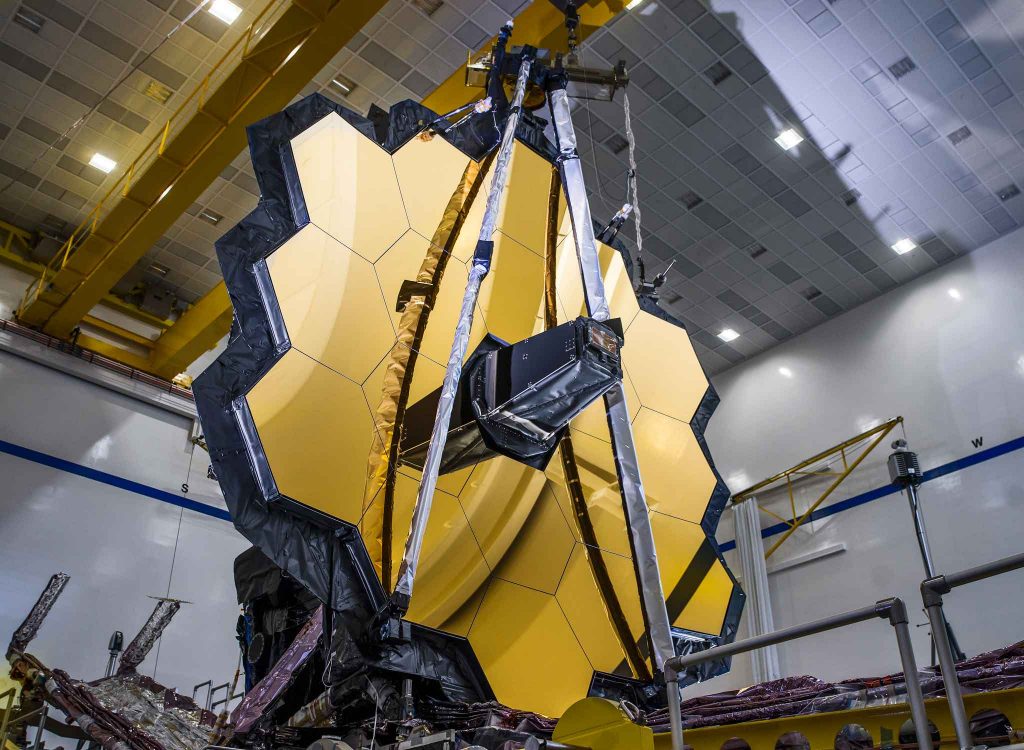
The Space Telescope James Webb works like a time machine. It looks back over 13 billion years to see how the first galaxies formed by using infrared light. The telescope's mirror is made of 18 parts that work together to collect the faintest light from the oldest objects in space.
You can think of the telescope as a cosmic detective. Instead of digging in the ground, it looks deep into space to find clues about the universe's past. This helps scientists learn about how stars and galaxies were born, giving us a better understanding of space.
James Webb Space Telescope Takes a Picture of a Cosmic Giant!
Recently, the James Webb Space Telescope took a stunning picture of a huge galaxy cluster. This cluster acts like a “cosmic lens,” bending and magnifying light from galaxies behind it. This helps us see deeper into space than ever before.
Without the James Webb telescope, we wouldn’t be able to capture this kind of image. Its powerful infrared sensors and large mirror help it see light from galaxies that are billions of years old. These images help scientists learn about dark matter, how galaxies evolve, and the most extreme parts of space, all from almost one million miles away.
James Webb Space Telescope May Have Found Early Galaxies
The James Webb Space Telescope might have already broken records. In one of its first deep-space surveys, it found what could be the earliest galaxies ever seen. These galaxies formed just 300-400 million years after the Big Bang. If this is true, it would change what we know about how galaxies formed.
These discoveries show how powerful the James Webb Space Telescope is. Its mirror and advanced infrared technology help it see farther than any telescope before. Each new image it takes pushes the limits of space exploration.
The Telescope's features
The JWST has a number of unique features that make it one of the most powerful telescopes in the world. The primary mirror of the telescope is made up of 18 hexagonal segments. These are made of beryllium, a lightweight material that has a low coefficient of thermal expansion. This means the mirror maintain their shape even at very low temperatures, which is crucial for observing in the infrared. The JWST also has a sun-shield, which is made up of five layers of a special material called Kapton. The sun-shield protects the telescope from the heat of the Sun. This allows the telescope to operate at very low temperatures.
In conclusion, the James Webb Space Telescope (JWST) is the successor to the Hubble Space Telescope. The project is a collaboration between NASA, the European Space Agency (ESA), and the Canadian Space Agency (CSA). It is set to be one of the most powerful telescopes in the world! The JWST uses an infrared telescope that is optimised to detect light at longer wavelengths than visible light.
The main goal of the JWST is to study the early universe; by viewing the formation of galaxies, stars and planets. It is also aiming to study the light that passes through the atmospheres of exoplanets. This allows scientists to determine the composition of the atmospheres and search for signs of life. The JWST has a number of unique features such as a primary mirror made of 18 hexagonal segments made of beryllium. Also it has a sun-shield that protects the telescope from the heat of the sun, meaning the telescope can operate at very low temperatures.
To grab your own high quality print of some of the incredible images taken by these telescopes click here!
FAQs
Where is the James Webb Telescope right now?
The James Webb Telescope is at a position called Lagrange Point 2 (L2) that is 1 million miles away from Earth. It is a very stable position that also helps it to remain cool. You can check its position and working status at NASA’s live dashboard.
Which country owns the James Webb Telescope?
James Webb Telescope has launched with he collaboration of space agencies of three countries. It includes NASA (USA), European Space Agency (ESA), and Canadian Space Agency (CSA). This collaboration makes it an international project that is not owned by a single country.
What does the James Webb Space Telescope do?
The James Webb Telescope helps astronauts see space with infrared light. It gives an opportunity to see the space dust and gases. Moreover, you can see the earliest gases in space and what happens after a Big Bang. It gives you a look at how new stars and galaxies form.
Ready to capture your special moment?
Create Your Star Map →