


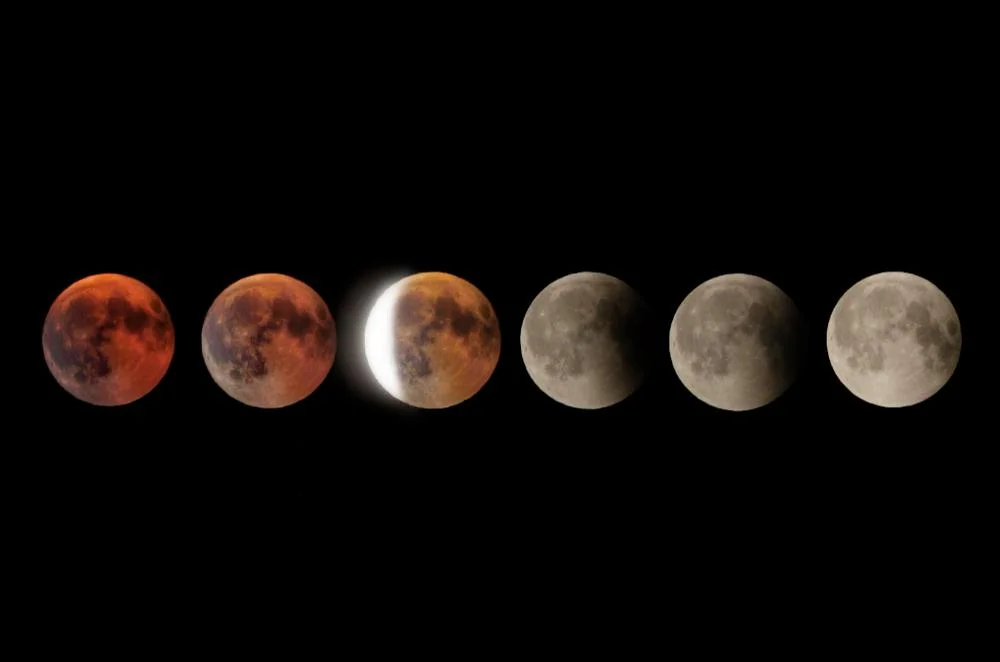
When you look at the moon, it can appear different from day to day. Not only does the moon's color change, possibly appearing yellow, red, or even blue, but it also seems to change shape. Apart from its change in size such as the super moon, when you see the moon change, these differences are the phases of the moon.
In fact, it's not that the moon changes, but rather your perspective of it. Apart from a lunar eclipse, the moon is consistently turned toward the sun. To understand why you see something else, you need to understand the phases.
In this blog, we'll reveal why the moon's appearance changes and how you can identify its different phases.
What Are the Phases of the Moon?
The moon phase describes how much of the Moon’s surface is visible from Earth. It changes throughout the month as the Moon orbits Earth. The moon phase gives us eight distinct stages of the moon that repeat roughly every 29.5 days. These are:
- New Moon – The Moon is between Earth and the Sun; it appears invisible.
- Waxing Crescent – A thin sliver of light starts to show.
- First Quarter – Half of the Moon is visible, lit on the right side.
- Waxing Gibbous – More than half is visible and growing.
- Full Moon – The Moon’s face is fully illuminated.
- Waning Gibbous – The light starts to fade.
- Last Quarter – Half of the Moon is lit again, now on the left.
Waning Crescent – Just a small crescent remains before the next lunar stage begins.
However, these phases aren't a specific appearance that the moon keeps for three days. Instead, the moon's appearance gradually changes between each phase.
What Causes Lunar Phases?
Lunar phases happen because the Moon moves around the Earth. As it moves, sunlight hits it from different angles. This changes how much of the Moon we can see lit up from Earth. That’s why we see different shapes, like a full moon or a crescent moon.
How Are the Phases of the Moon and the Months Linked?
The word “month” comes from “Moon-th.” That’s because many ancient calendars were based on the lunar cycle. A full set of lunar cycle moon phases takes just under a month to complete, and many cultural events and festivals still follow these rhythms today.
The 8 Lunar Phases of the Moon
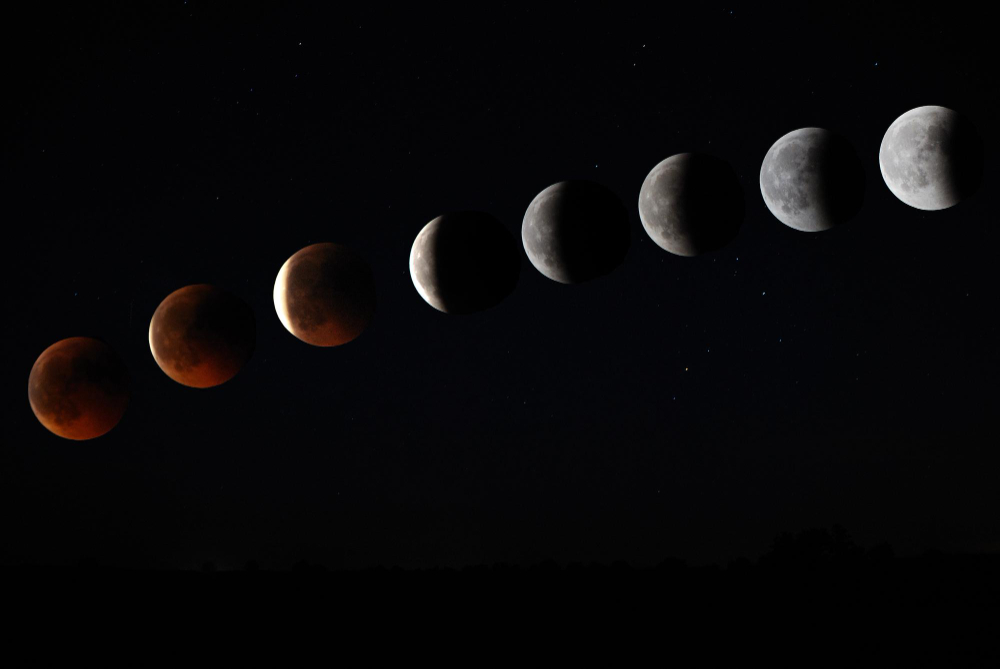
The moon has 8 phases which you can identify. While these phases go from primary phases to intermediaries, you'll cycle from not seeing the moon to seeing its illuminated side fully and back. Each of these phases lasts just under 4 days.
Now, let's dive deeper into these phases:
1. New Moon
We'll first examine the new moon phase. During this phase, the moon appears to be dark because from your perspective its side that faces the sun is away from the Earth. Interestingly, during this time, the moon is actually positioned in front of the Earth.
However, this should not be confused with a lunar eclipse. The main difference between a new moon and a lunar eclipse lies in their positions relative to the Earth and the sun. Unlike the new moon where the moon is in front of the Earth, during a lunar eclipse, the moon is behind the Earth and passes through its shadow. Plus, it may also have a red hue due to the light scattering off the Earth's surface.
2. Waxing Crescent Moon
One of the phases of the moon is the crescent. There are two types of crescents, but we'll explore the one that follows the new moon: The waxing crescent. As its name implies, it appears like a crescent of reflected light on the right side of the moon.
This crescent shape may be crisp or you may see a faint shape of the rest of the moon. This faint glow comes from the light reflected from the Earth's surface.
3. First Quarter Moon
The next phase of the moon after the crescent enlarges is the first quarter moon. During this phase, you only see the right half of the moon. The reason why you'll only see half of the moon is because it's next to the Earth in relation to the sun. Therefore, you only see its profile.
4. Waxing Gibbous Moon
The phase after the first quarter is the waxing gibbous. Since it's the phase right before the full moon, you may think it is one. However, there's a slither of the moon you can't see. So, if you think the moon looks slightly lopsided, it may be a gibbous moon. With a waxing gibbous moon, the part of the moon you can't see is to the west.
5. Full Moon
After the gibbous moon, there's the most recognizable phases of the moon: The full moon. In this phase, you'll see all of the moon's side that faces the sun. At that time, the Earth is behind the moon. However, the moon isn't usually in the Earth's shadow. Therefore, from your perspective on Earth, the moon appears fully lit.
Rarely, the moon can be in the Earth's shadow, when it crosses its orbit. Then, there's a lunar eclipse.
6. Waning Gibbous Moon
A few days after you've been able to see the full face of the moon, there's the waning gibbous phase of the moon. Just like the waxing gibbous moon, this phase appears as a near-full moon. On the moon's right, there is a sliver of the moon that you can't see. Moreover, since it's after the full moon, it will look less full over time.
7. Third Quarter Moon
When the waning gibbous moon passes, there's the third quarter phase. During this primary phase, you'll only see the left side of the moon. Just like with the first quarter phase, the moon is to the side of the Earth, in relation to the sun.
8. Waning Crescent Moon
Finally, the last phase in the cycle is the waning crescent. As the moon enters this phase, it goes from looking like it's half-lit to only having a small portion reflecting the sun's light. Additionally, the lighter face of the moon in this phase is on the left.
Full Moon Names & Their Meanings
Each full moon of the year has its own traditional name, passed down through cultures and often tied to the seasons or nature.
- January – Wolf Moon: Named after howling wolves in winter.
- February – Snow Moon: Symbolic of heavy snowfall during this month.
- March – Worm Moon: Earthworms reappear, signalling spring.
- April – Pink Moon: Named after blooming wildflowers.
- May – Flower Moon: Reflects peak spring blooms.
- June – Strawberry Moon: Linked to the strawberry harvest.
- July – Buck Moon: When deer begin to grow new antlers.
- August – Sturgeon Moon: Named for the large fish seen this time of year.
- September – Full Corn Moon: Marks the traditional harvest season.
- October – Hunter’s Moon: Bright moonlight for hunting preparations.
- November – Beaver Moon: Beavers build dams ahead of winter.
- December – Cold Moon: Long, cold nights begin to set in.
Conclusion
Now you know that there are 8 phases of the moon: New moon, Waxing crescent, first quarter, waxing gibbous, full moon, waning gibbous, third quarter, and waning crescent. The moon changes in appearance because of where it's located in the solar system.
As the moon journeys around our planet, the moon's side that reflects sunlight changes. Therefore, you'll see a different amount of the Moon. However, you may see the faint shape of the rest of the moon due to the light the Earth reflects. With this understanding of the moon's appearance, you can confidently look at the moon and have fun identifying its phases.
Ready to capture your special moment?
Create Your Star Map →