


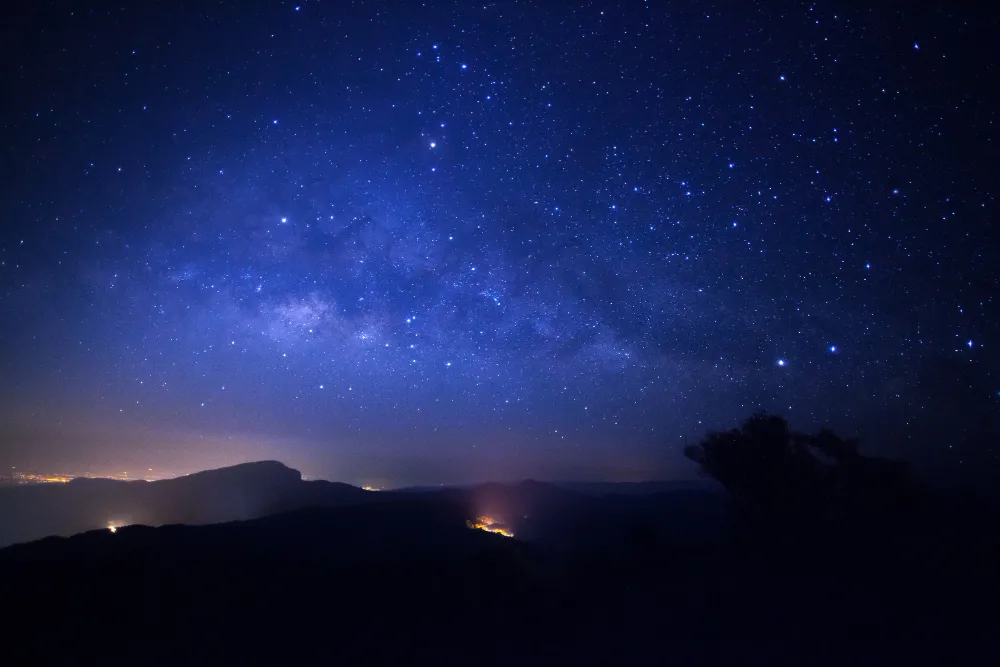
Have you ever looked up at the night sky and wondered, “How do stars form”? It all begins in deep space where giant clouds of gas and dust float quietly. These clouds don’t look like much at first but something amazing is happening inside. Bit by bit, they come together to create light.
In this post, we’ll explore the simple steps of how stars are born and how they grow into the shining lights we see above.
The Start of Something Stellar From Dust to Dazzle
Star formation begins in the quietest parts of space. In the vast, cold expanses of gas and dust known as molecular clouds, a slow transformation begins to take shape. These clouds float through space, dark and heavy, waiting. But space is never still. A nearby explosion, a wave of pressure, or the pull of gravity can cause things to stir up.
Small areas within the cloud begin to accumulate more gas and dust. These tiny changes grow into thicker patches. Gravity pulls even more material in. Slowly, the cloud begins to fall inward, and heat builds deep in the centre. This is where the first stage of a star begins.
Here’s what triggers this transformation:
- a nearby star explosion
- a shock wave passing through the cloud
- the gravitational pull from surrounding matter
You can see the magic of this process in places like the Orion Nebula and the Eagle Nebula. These stellar nurseries, captured in stunning images by telescopes, reveal:
- towering columns of gas glowing softly
- signs of new life forming within
They show us how the stars are formed deep within the fabric of space.
How a Protostar Begins to Glow in the Cosmic Cradle
As the cloud continues to collapse, its center becomes hotter and more dense. A pre-stellar core forms. This core is small, dense and hidden deep inside. This is the first quiet step toward becoming a star.
Around it, gas and dust begin to spin and create a flat disk. As it turns, two narrow jets shoot out from its top and bottom. These beams mark the birth of a protostar, a young star still wrapped in its dust.
Inside, pressure builds. The heat rises. Then comes a powerful change. Nuclear fusion starts as hydrogen atoms combine to form helium, releasing both light and energy. Now, the protostar starts to shine. A star has taken its first breath.
The Journey of Star from T-Tauri to Main Sequence

After a star is born, it does not become calm right away. It first enters a stage called the T-Tauri phase. During this time, the young star is full of energy. It flares and flickers, often sending out bursts of light. It is still surrounded by the gas and dust left over from its birth. We cannot always see it clearly, but special telescopes can find its warm glow in infrared light.
As the years pass, the star slowly becomes steady. It reaches a stage called the main sequence. This is where it shines with a constant light. It is balanced inside, with pressure and gravity working together.
Most stars spend the longest part of their life in this phase. For example, our Sun has been in the main sequence for about 4.6 billion years
This peaceful stage is the final step in the formation of a star. It is here that a star’s true nature is set:
- its size
- its colour
- how long it will last
But the story does not end with the star. The leftover dust and gas around it combine to form other objects like:
- planets
- moons
- asteroids
Even the Earth, and everything on it came from those scattered pieces. We are here today because a star once formed and left behind the building blocks of life.
Exploring Star Nurseries Across the Universe Through Telescopes Like Webb
Much of a star’s early life is hidden in visible light, wrapped in thick clouds of dust. But with telescopes like James Webb and Hubble, we can now peer into the heart of these stellar nurseries.
Take the Tarantula Nebula, for instance. Webb revealed tens of thousands of young stars that were once invisible behind dark clouds. Or look at the Pillars of Creation, where we see stars forming at the glowing tips of towering columns.
These tools allow us to observe the formation of a star in real time. They help us identify:
- the structure of the clouds
- chemical signatures
- how energy shapes matter
Science and wonder come together in these images. They are windows into cosmic creation.
How Picture The Stars Makes Your Moment Shine in the Sky
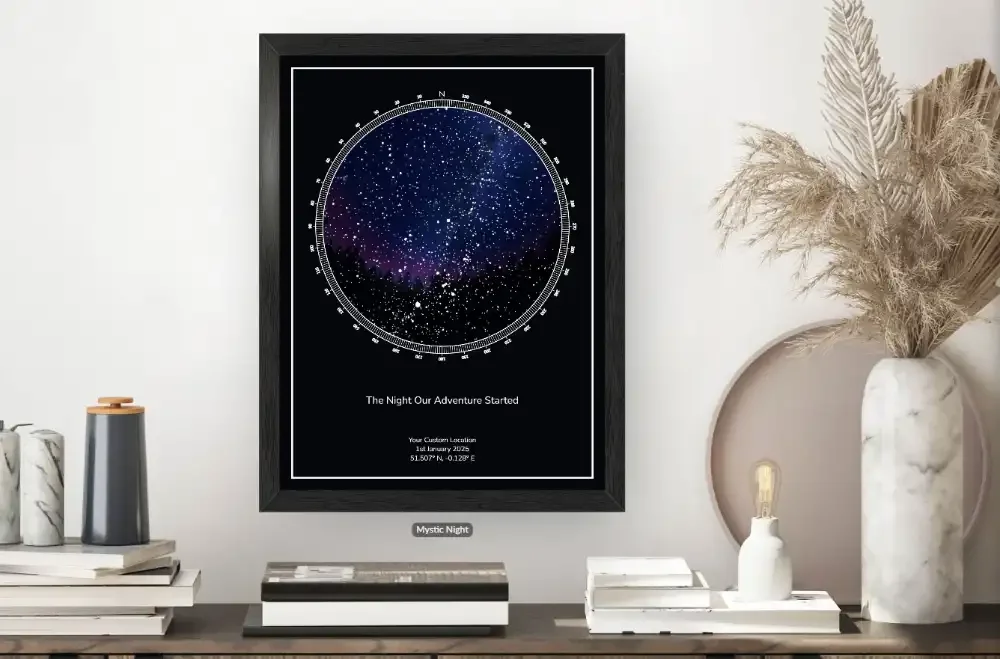
A star map captures how the stars were arranged in the sky at a precise moment and place. It can be your wedding night, the day your child was born, or a moment you wish to hold onto forever.
Each point of light on the map began long ago, in the quiet corners of space where stars are born. The map brings that journey full circle, from the deep stillness of a nebula to the moment that matters most to you.
When you order a personalised star map from Picture the Star, you choose a date and a location. The sky from that time is charted, printed, and made into a keepsake you can hold. It is your night, drawn in stars.
Ready to create yours? Choose your date. Choose your place. Select the customisation options for frames and sizes. Capture the magic of your cherished moment with Personalised Star Maps.
Ready to capture your special moment?
Create Your Star Map →