


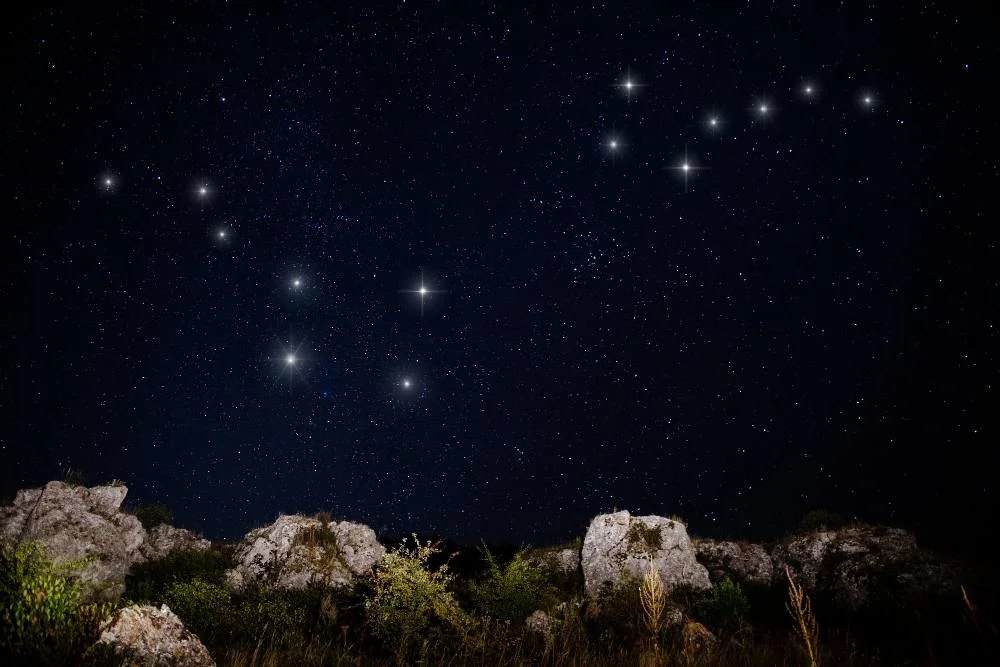
If you've ever gazed up at night, you might have noticed the shape of the stars in the sky. These patterns aren't real. However, if you were to draw connecting lines between these stars they may look like objects, animals, or even mythological scenes. Depending on where you are on Earth, you'll see different patterns and they may have alternate names based on various cultures. With so many shapes to learn, you might think it's too difficult. Yet once you understand how to watch the stars and locate them it'll be easier.
In this blog, we'll explore the patterns of the night sky and how you can find them.
What Are the Star Shapes in the Sky?
You can refer to these patterns as either constellations or asterisms. Though you might think of constellations as a group of stars, a more accurate definition is a location in the sky as seen from Earth. The International Astronomical Union settled on 88 such locations and all the stars in these areas are part of their respective constellations. Meanwhile, asterisms are small groups of stars you can easily spot within a constellation.
How to Find the Shape of the Stars in the Sky
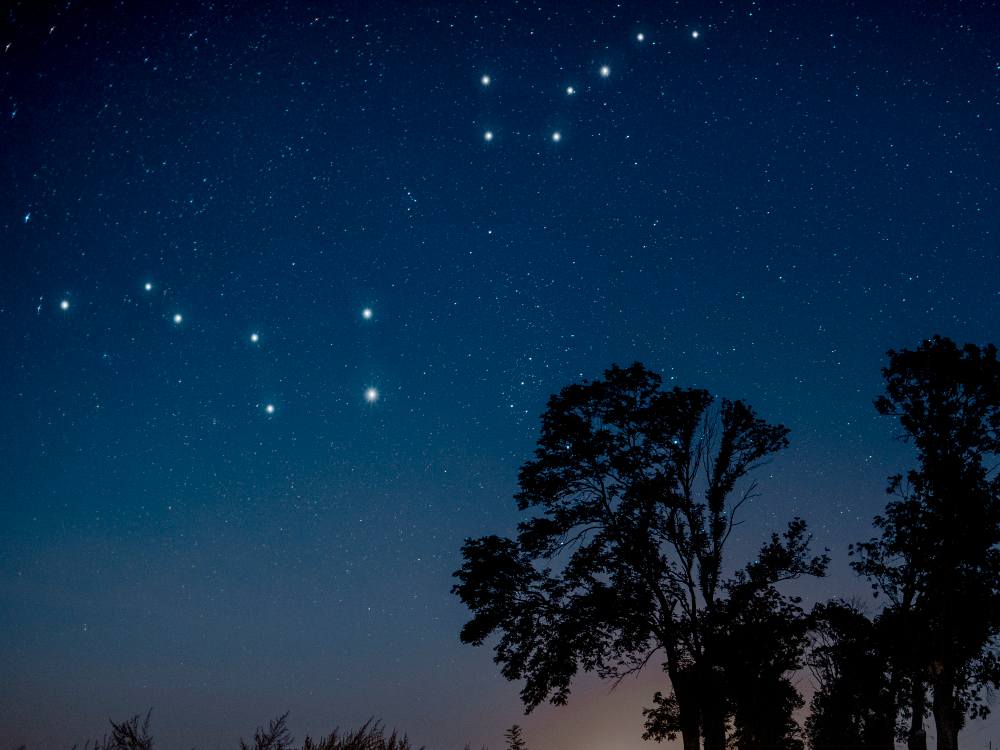
Understanding the stars starts with stargazing. This will familiarize you with the constellations and asterisms of your region. To discover the stars in the sky, follow the steps:
1. Gather Star Finding Tools
To start identifying stars and their patterns, you should gather these tools:
- Star Map: This is a representation of the sky as seen from your location. These maps come in physical or digital forms. They can make finding constellations easier by showing their location and drawing connecting lines between the stars to form illustrations. However, you may require some understanding of coordinates to use them.
- Telescope: You can use this tool to see the stars clearly. A telescope works by making images larger with its lenses.
- Binoculars: Just like a telescope, this tool helps you see stars more clearly by using lenses to make the stars appear bigger.
However, this step is optional since you can find constellations without them. Therefore, you can go to step 2 without these tools though they will make stargazing easier.
2. Locate an Optimal Stargazing spot
Once you've gathered a star map and another tool to see stars clearly, you should find the right place where you'll stargaze.
Stars can be difficult to see when there are other lights whether it's city lights, car headlights, or even a phone. In addition, some star patterns are near the horizon. Therefore, you should select an area with little to no light pollution and a complete view of the sky down to the horizon.
3. Stargaze at the Right Time
After you've found where you'll stargaze, you need to go there at the right time. You'll notice the shape of the stars in the sky when it's darkest. Therefore, you should time your stargazing for a new moon, after the sun has completely set.
4. Take Your Time
Once you've found the right night to stargaze, you should be patient. Your eyes can take up to 20 minutes to get used to low lighting. Therefore, you should gaze at the sky for a while without looking at any lights, including your phone.
5. Find the Brightest Stars
Now that you've taken your time to look at the sky, you should find the brightest stars. These will be the easiest for you to locate in the sky. You could start with Polaris, one of the brightest stars you'll find in the north.
To verify you're watching a star, you should watch for:
- Traveling Speed: Stars move very slowly across the sky. If you see that it's moving faster than the rest of the stars, it might just be a satellite.
- Traveling Pattern: Stars usually move from west to east during the night. Additionally, the night sky will change over the course of the year. Therefore, you'll see a different sky every season. However, if a light in the sky moves out of pattern from the rest of the stars, it may be a planet instead of a star.
- Twinkling: Stars put out an unsteady light. They should twinkle, unlike planets and satellites.
6. Learn the Constellations
After you've found bright stars, you can use them to study constellations. You'll use the location of these bright lights to find constellations on your star map. Alternatively, you can look up the constellations of the season. Then, you can try to find their asterisms while you're stargazing. The longer you look at the sky, the easier it will be to remember the constellations and find them again.
The Brightest Shapes in the Sky

You can put the above guide to stargazing in action by looking for the following brightest patterns:
1. The Big Dipper:
You'll find this asterism in winter, as part of the Ursa Major constellation. Its simple pan shape and bright stars make it easy to find. You just need to locate four stars in the shape of a bowl connected to a line of 3 more lights.
2. Leo:
This is another bright constellation you'll find in the northern hemisphere. In spring, you'll find Leo by looking for a backward question mark. Its brightest star is the “point” of the question mark: Regulus.
3. The Teapot:
During the summer, you can spot various asterisms in the night sky, including the one known as "The Teapot." To find this teapot-shaped pattern, look towards the center of the Scorpius constellation. However, it is important to note that "The Teapot" is actually part of the Sagittarius constellation. This distinction helps you locate and recognize it more easily in the vast expanse of the night sky.
4. Andromeda:
You'll locate this autumn constellation by finding its brightest star: Alpheratz. It also has these bright stars: Mirach, Almach, and Delta Andromeda. This constellation is next to the W-shaped Cassiopeia constellation.
Conclusion
Now you are familiar with the various shapes of stars in the sky, how they are grouped into constellations, and the best ways to observe them. The sky has been divided into 88 distinct regions by the International Astronomical Union, each representing a different constellation. Within these constellations, you might also notice smaller recognizable patterns known as asterisms. This structure helps you navigate and appreciate the night sky more effectively.
To start stargazing, you can look for asterisms to help you find constellations. However, you'll need to find the perfect stargazing spot: A place away from bright lights and from which you'll see the horizon. Then, keep in mind the brightest star patterns we outlined and try to find them when you go stargazing.
Ready to capture your special moment?
Create Your Star Map →