



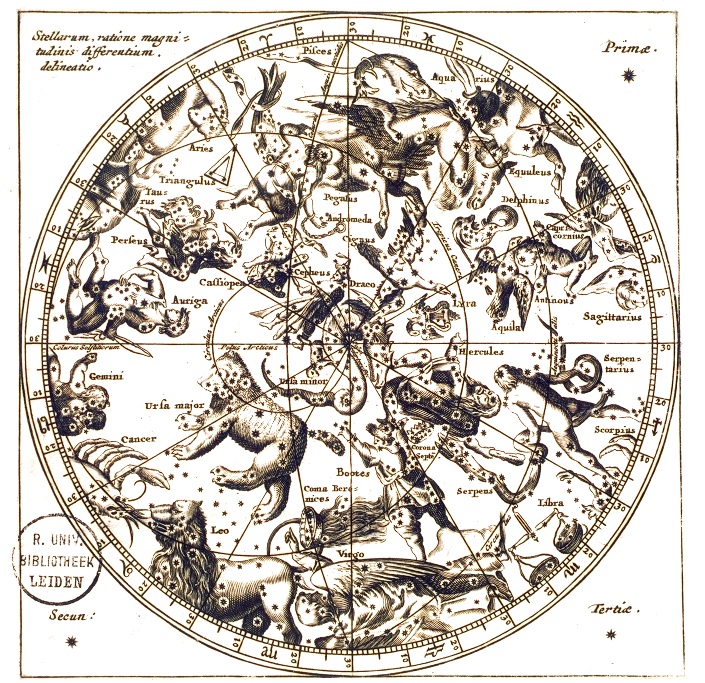
What Constellations Can You See in the Night Sky?
The constellation you see in the sky changes every night throughout the year. It is different in the nights of summer and winter. This is because Earth revolves around the sun and completes one circle in a year. For instance
- During summer nights, you might see constellations like Scorpius and Lyra
- In winter, Orion and Taurus often stand out
Besides the time of the year, it also depends on the location. Northern and southern hemispheres have different constellations. One example is the Crux or the Southern Cross. You can only see it from the Southern Hemisphere.
Stargazers often ask, What does a constellation mean when they notice familiar shapes in the sky. These patterns are not only beautiful but also help with navigation and signal the changing seasons. The constellation meaning often comes from stories or myths tied to cultures around the world.
Pro Tip: If you are new to stargazing, start with something easy. Try to find the Big Dipper or Cassiopeia. They are simple to spot and stay visible most of the year.
Throughout human history, we have gazed up at the night sky in all of it’s wonder! People started searching for patterns and shapes among the stars. These patterns eventually became what we call constellations, and they have played an important role in cultures all over the world. This blog post explores the history and meaning behind constellations; and how they have influenced human culture and mythology.
What’s the Difference Between Astrology and Astronomy?
Both terms, astrology and astronomy, are related to stars and their movements, but they do not have the same meanings. Astronomy is a science that studies the stars, their movements, and positions. This knowledge expands its limits to galaxies and space. Astronomy is based on real data and observation.
On the other hand, astrology does not have any scientific relevance. It relates the position of stars to zodiac signs and studies their effects on your life and personality.
Feature |
Astronomy |
Astrology |
Definition |
Scientific study of stars, planets, and galaxies |
Belief system linking celestial positions to life events |
Based On |
Observation, evidence, and data | Tradition, belief, and interpretation |
Focus |
Understanding the universe and physical laws |
Predicting human traits and future events |
Scientific Method |
Yes – follows research and testing |
No – not based on scientific testing |
Use of Constellations |
For navigation, naming, and space exploration |
For zodiac signs and personality analysis |
Tools Used |
Telescopes, satellites, computers |
Birth charts, zodiac wheels |
Example Application |
NASA mapping star positions for space missions |
Daily horoscopes based on your birth date |
This is where the confusion around constellations meaning often begins. When someone asks what does constellation mean, the answer depends on context. In astronomy, it refers to a group of stars forming a pattern. In astrology, it links those star patterns to zodiac signs and personality traits.
The Origins of Constellations
The earliest recorded constellations can be traced back to ancient Babylon. They used constellations to navigate and to mark the passing of the seasons. The Babylonians divided the night sky into 12 sections, each corresponding to a month of the year. Therefore they assigned specific constellations to each section to work this out. This system was later adopted by the Greeks, who added their own myths and stories to the constellations.
The Greeks and Romans
In Greek and Roman mythology, the constellations were often associated with gods and heroes. For example, Orion’s belt was said to represent a great hunter, whilst Cygnus was said to represent a swan. These myths and tales were passed down through their generations. They became an important part of Greek and Roman culture and history.
The Zodiac
The zodiac is a band of constellations that circle the Earth. It has played a significant role in astrology for centuries even to the modern day. The zodiac contains 12 signs, each corresponding to a month of the year. Each sign has become associated with certain personality traits and characteristics of people born in that time. Astrologers use the position of the planets and stars within the zodiac to make predictions about a person's future.
Constellations Today
Today, constellations continue to inspire and captivate so many of us. They are still used for navigation and to mark the passing of time. Including being a source of inspiration in art and literature. Although now we understand that the stars are not actually arranged in the patterns that we see from Earth. The stories and myths associated with each constellation continue to fascinate and inspire us with their connection to the past.
How Does NASA Use the Constellations?
NASA uses constellations in useful ways. These star patterns act like markers in space. Since stars stay in the same spots for a very long time, they help guide spacecraft.
Robotic spacecraft use star maps to know where to go. They take pictures of the sky, match the stars they see to their maps, and follow the right path. This is called celestial navigation.
Astronauts learn how to do this, too. If their digital tools stop working, they can still use the stars to find their way. Even though it is an old method, it still helps in space today.
Constellations also help NASA name things in space. For example, the Orionid meteor shower looks like it comes from the constellation Orion.
Conclusion
Constellations have been a part of human culture for thousands of years! They continue to be an important source of inspiration and fascination even today. Whether we are looking up at the night sky to navigate or simply to admire its beauty; the constellations remind us of our place in the universe and the wonders that exist beyond our own world. If the history and meaning behind constellations fascinates you too, you can add them onto your very own star map!
Ready to capture your special moment?
Create Your Star Map →