


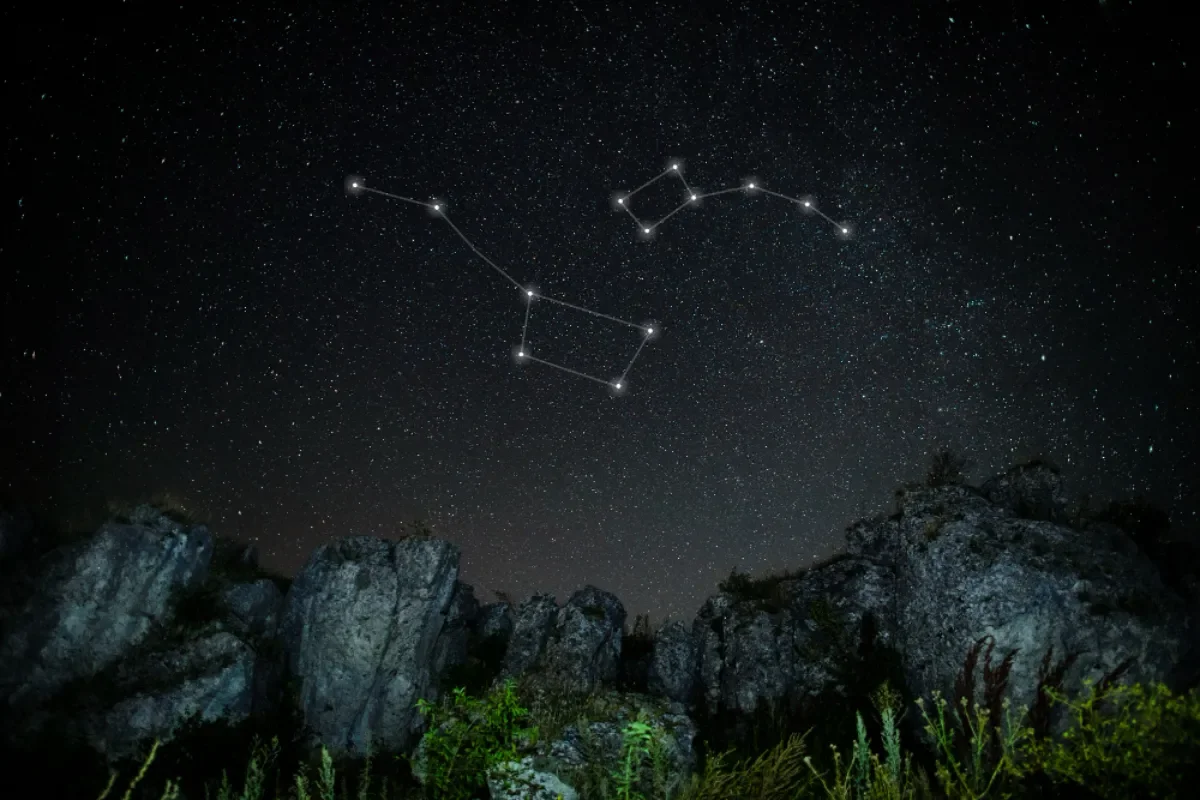
If you are an amateur stargazer, the first group of stars you may have heard of is the Plough. This recognizable cluster of stars is a good start to learn about stars. However, you must first know what the Plough is and where you can find them. Then, you will have a good basis to star-hop or otherwise learn more about the night sky.
This blog will explain the plough constellation and guide you through the steps to find it easily.
Now, let us uncover this celestial body and why it has this name.
What Is the Plough?
Also known as the Big Dipper, the Saucepan, and the Chariot, the Plough is an asterism. That means that it is a group of stars that, together, create a shape you can easily recognize. In this case, this cluster of stars has 7 stars in the shape of a ladle.
Out of all the asterisms and constellations, the plough is one of the most recognizable because it's permanently visible. More specifically, this asterism remains in the northern hemisphere sky all year long. Seeing as this asterism points to the North Star, it is also very convenient for navigation.
The Stars in the Plough Constellation
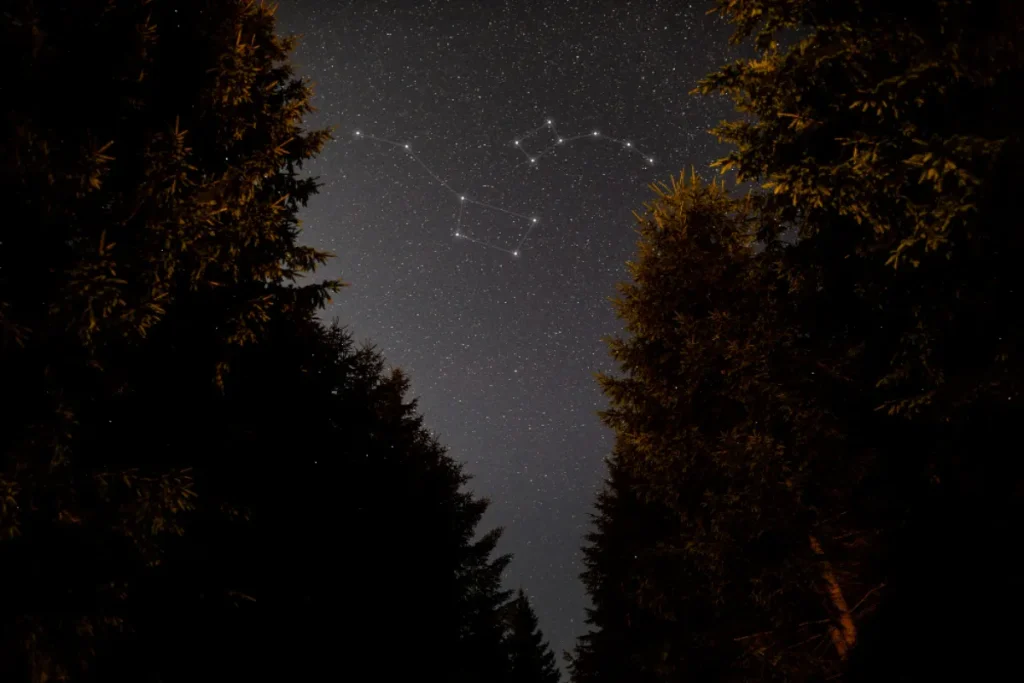
According to reports, the Ursa Major constellation, which contains the Plough, has 22 officially named stars. The brightest of these stars are in the Plough.
Here are the asterism's 7 stars in order of brightness:
- Alioth: This is the brightest star in Ursa Major. This name means “black horse”.
- Dubhe: This is the second brightest star in Ursa Major but the brightest one in the cup or pan part of the asterism.
- Alkaid: This star's name means the “end of the tail”.
- Mizar: Starting from the tip of the handle, this is the second star. Its name means “girdle”, which comes from its association with the star Alcor. Together, these two stars are the “horse and rider” in Arabic tradition.
- Merak: This star has a brightness of 2.37. Its name means “loins of the bear”.
- Phecda: The name of this star means “thigh”.
- Megrez: This star's name means “root of the tail”. It is the part of the handle that attaches to the cup or pan of the asterism.
Note: Alcor is such a faint star that is so close to another, brighter one that you do not need to consider it part of the asterism.
Is the Plough a Constellation?
While the Plough is a very recognizable and popular asterism, it is not a constellation since it is part of the Ursa Major constellation. In general, constellations are larger than asterisms. In fact, one constellation could have multiple asterisms. That said, it does not mean that asterisms can never be constellations. For instance, Andromeda is both an asterism and a constellation.
How to Find the Plough Star Constellation?
Finding this asterism is simple. It is large and near the center of the night sky. When you raise your arm to the night sky, it can fit within your palm.
Here are the steps to find the Plough:
- Find the North: To locate this asterism, you first need to position yourself to face the North. You can use a compass or look to the left of where the sun sets.
- Locate Polaris: After you have found the North, you need to look up. There is a bright star called Polaris.
- Recognize the Handle: Finally, you should see a few bright stars that seem to follow each other. These stars are the handle part of the asterism.
Gaze upon the Plough Constellation Stars with Picture the Star
The simplest way to admire this group of stars is with a picture from Picture the Star. Their framed pictures of the night sky give you an accurate yet stunning depiction of the stars. With their options, you can select your preferred color theme, border type, and even grid maps. Beyond asterisms and constellations, you can also purchase specific night sky areas that are important to you or your loved ones.
Conclusion
Now you know that the plough's constellation is the Ursa Major. This cluster of stars is only a part of the larger constellation. Yet its smaller size does not lessen its historical importance or value to stargazers. Even though the plough is smaller, it has some of the brightest stars in its constellation. Moreover, it is close to the North Star and is visible throughout the year. This makes it a great tool for navigation and identifying other stars. While you can easily find it, you can also purchase a framed picture from popular platforms such as Picture the Star.
Frequently Asked Questions
Is Orion's belt the same as the Plough?
Orion's belt is not the same as the Plough. Orion's belt is similar to the Plough in the sense that they are both asterisms. Whereas Orion's belt has 3 stars and is part of the Orion's constellation, the Plough has 7 and is part of the Ursa Major.
Why is it called the Plough?
The Plough asterism received its name because the Ancient Greeks thought it resembled their version of a plough. The pan or cup part of the asterism represents the tip of the plough that digs into the earth. Then, the long extension of the Big Dipper represents the handles of the plough.
What is the handle of the Plough constellation?
The handle of the Plough constellation is a group of stars that make a curved line. When considering only the brightest of the stars in that line, there are Alioth, Alkaid, and Mizar. Nearly on top of Mizar, there is a smaller, fainter star: Alcor.
Ready to capture your special moment?
Create Your Star Map →