


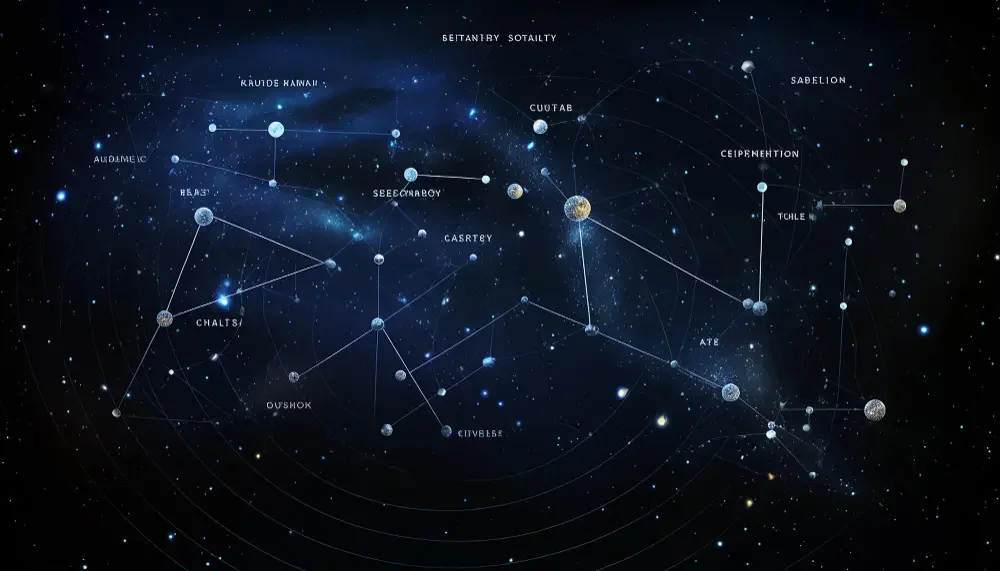
If you desire to become more familiar with the night sky, there are tools you can use, including a star chart. Ancient civilizations that date back at least 10,000 years have painted on cave walls their own versions of these charts.
On the other hand, modern astronomers have improved this ancient tool's accuracy and level of detail with the help of the latest technology. Despite its impressive history, it's a simple tool you can use to stargaze.
In this blog, we'll explore what these charts are and how you can use one as an astrologer, astronomer, or traveler.
Star Chart Astrology Explained
These charts are maps that depict the night sky and its celestial bodies. In astrology, these maps often depict the mythological figures the group of stars represent. More modern charts come in the form of oval drawings in books or software.
Alternatively, they can come in the form of a planisphere. This is a tool composed of two parts: A full map of the sky and another layer that creates an oval window. Through this window, you can see a map of the sky at a specific time. Then, you can move the window to match the map to a different time period.
Furthermore, you can use them in astronomy to locate an area of the sky you wish to study. They're also a physical representation of an astronomer's cumulative recognized findings. Alternatively, you could use them for navigation as seamen did in the past when they had no landmarks to guide them. You could also use them to find specific stars or constellations and simply stargaze.
What Star Charts Show Us
Star charts show the positions of stars, planets, and other celestial objects. Both beginners and experienced astronomers use them to navigate the sky.
Each chart shows how stars align to form constellations. These charts are based on specific times and locations. They help you plan exactly when and where to look.
One major advantage of using a star chart is that it offers real-time guidance. Even with light pollution or cloud cover, you can still locate constellations like Ursa Major or Gemini and track planets such as Mars and Jupiter.
Understanding Greek in Star Charts
Many star charts today have roots in ancient Greece. Early Greek astronomers were among the first to map the stars to understand the night sky. A lot of the constellation names we use now come from that time.
Greek mythology adds rich meaning to the night sky. Constellations like Orion and Leo are named after legendary figures. These names help turn these star patterns into timeless stories filled with history and symbolism.
You will often see Greek words on star charts. For example, “aster” means star in Greek and appears in many star-related names. Astraea, a Greek goddess, shares her name with both a star and a constellation.
Knowing this Greek background adds something special to stargazing. It turns a chart full of stars into a map of ancient stories. Whether you use a star chart UK or any other, these old names help connect you to the past while exploring the night sky.
Best Star Atlases and Star Charts
When it comes to choosing the best star charts for your needs, it's important to consider your level of experience. Some charts are simple and great for casual stargazing. Others are detailed enough for deep-sky exploration.
For beginners, a sky chart with clear markings and simple instructions is ideal. Many online resources and apps can provide such interactive charts. They let you enter your location and time of year to generate a real-time night sky map. Some of the best apps even allow you to point your phone at the sky, and they will identify stars and constellations for you.
For experienced stargazers, a star atlas with multiple layers of detail, including the positions of faint stars, is an excellent tool for deeper exploration. These comprehensive atlases often include star charts for different times of the year and can be used as a guide for deep-space observations.
What Is My Star Chart?
Your specific chart refers to one that matches the appearance of the sky on a date of your choice. The night sky changes over time, so capturing the exact appearance of the sky can be of personal importance to you.
Therefore, these charts could refer to a map depicting the night sky on your birthday, viewed from the location of your birth. Alternatively, it could be a map of what the sky looked like when you married your spouse or any major event in your life.
The Star Chart Features
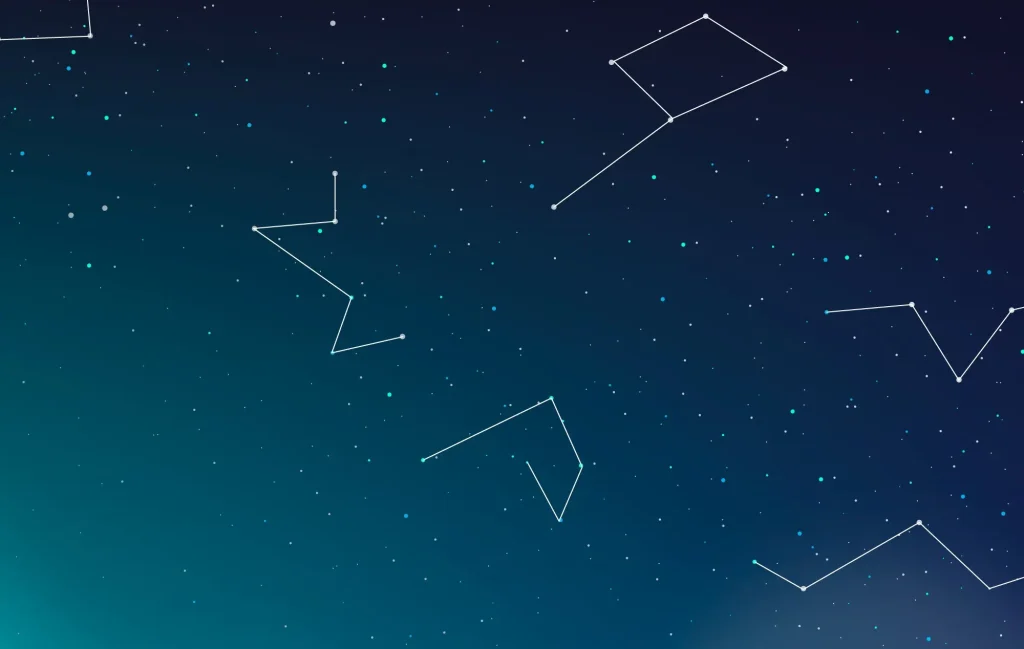
Celestial maps can have different appearances, and so they have different elements. However, they'll usually have the following features:
Celestial Bodies
Apart from stars, they can also depict nebulae, galaxies, planets, meteor showers, and comets. The celestial bodies you'll see depend on the location and time the map matches. However, some charts don't show anything other than the brightest and most commonly known stars.
Furthermore, the maps will represent the stars as dots. The size of the dot doesn't mean it's bigger. Rather, it shows that the star is brighter when seen from Earth. Additionally, the dots could be white on a black background or vice versa.
Drawings
Drawings might be found near or underneath constellations. Usually, these illustrations match the myth behind the constellation's name, but they could differ based on the culture of the map charter.
For example, it could have a drawing of a lying woman that matches the Cassiopeia constellation popular in Western culture. Conversely, a Chinese chart may have illustrations of the asterisms that match the Cassiopeia equivalent such as the The Black Tortoise of the North.
Greek Letters
Some maps have Greek letters next to the stars. These stars are part of a constellation and will have their name and Greek letters. This lettering system indicates the order of the stars in this group based on brightness. For example, the brightest star in the Andromeda constellation has the Greek letter alpha: α.
Lines
Some maps have lines that connect stars into groups that are either asterisms or the constellations they are a part of. Alternatively, they may not have any, allowing you to draw them – especially if the map has a light colored background.
Moreover, these charts may have grids. These lines segment the map for you to more easily identify different areas of the night sky.
Are Star Sign Charts Accurate?
Map makers try to make accurate charts. Over thousands of years, astronomers have perfected the craft and used increasingly accurate technology to create more detailed charts. However, even computer-generated maps are only accurate for a specific time, as seen from a particular location.
Moreover, they're not an exact representation since these maps are flat. Therefore, the edges of the map have distortions. To accommodate for that, map makers can split these charts into segments. Alternatively, you can use digital maps and center the star you're searching for to have the least distorted image.
How to Use a Zodiac Star Chart
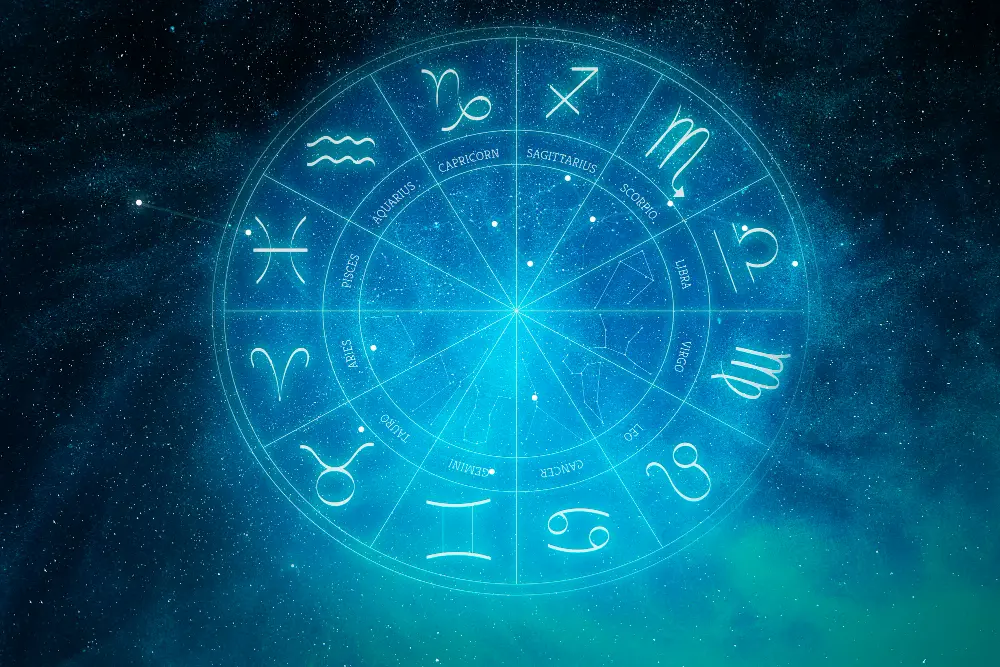
If you desire to gaze upon the zodiac constellations, you should use the following steps:
- Find the Right Map: To stargaze with a chart, you'll need to first find a map that aligns with your latitude and time period.
- Wait for the Right Stargazing Conditions: After you've found the right chart, you should wait for a night with clear skies.
- Raise the Map: Once there are clear skies, go to an area with a full view of the sky and raise the map so its center is straight above you.
- Align the Chart: After you've raised the map above you, you should point its north marker in the northern direction.
- Locate Star Groups: Now that you've aligned the chart with the compass direction, you should look for an easily recognizable group of stars like the Big Dipper. From there, you can find other asterisms or constellations.
Conclusion
Now you know that a star chart is a depiction of the night sky, including stars, planets, and comets. It shows you the celestial bodies that you could see at a specific time and from your location. They've existed for thousands of years in the study of astronomy and astrology. Plus, they've helped seamen navigate when there are no landmarks.
Furthermore, you can get a chart demonstrating the mythological characters tied to different constellations. These maps may even have lines between stars to help you quickly identify the constellations or asterisms. So, utilize the guide above to start stargazing using these maps.
FAQs
What’s the best time of year to use a star chart in the UK?
In the UK, the best stargazing conditions often occur during autumn and winter, when the air is crisp and the skies are less humid. Using a star chart UK during these seasons makes it easier to see constellations like Orion, Taurus, and Cassiopeia with minimal light interference.
What equipment do I need with a star chart?
All you need is a printed or digital star chart and a dark, open space. Binoculars or a telescope can enhance the experience but they aren’t necessary to start identifying stars and constellation names.
What are some famous stars I can find using a star chart?
Popular stars like Polaris, Sirius, Betelgeuse, and Vega are commonly marked on most sky charts. These bright stars are easy to spot and serve as reference points when exploring deeper into the night sky.
Ready to capture your special moment?
Create Your Star Map →